Talabat Business & Revenue Model Explained!
6392 Views 10 min December 21, 2025

Airbnb business model transformed hospitality by proving that global scale does not require owning physical assets, only orchestrating participation through a digital marketplace.
The platform capitalized on the rise of the sharing economy, where access, experience, and income opportunities reshaped traveler and host behavior.
With operations spanning 220+ countries, millions of listings, and hundreds of millions of users, Airbnb demonstrates the scalability of a two-sided marketplace built on trust and interaction.
Its business model revolves around balancing host supply and guest demand while enabling discovery, communication, booking, and secure transactions.
Revenue growth stems from transaction-based commissions, premium visibility options, and expanded services such as experiences and extended stays.
The blog outlines practical architecture and planning steps for founders aiming to build similar platforms, including MVP scoping, integrations, scalability planning, and cross-device accessibility.
Strategic lessons highlight the importance of solving real problems, prioritizing user needs, adopting innovative technology, and delivering frictionless UX.
The narrative reinforces that marketplace success depends more on trust systems, ecosystem balance, and behavioral insight than feature count alone.
Apptunix’s approach emphasizes business-first product thinking, scalable architecture, and long-term marketplace evolution rather than template-driven development.
Ultimately, the blog positions Airbnb as a blueprint for platform-led disruption and guides businesses toward building experience-driven marketplace ecosystems.
Walk into a traditional hotel chain meeting and ask what it takes to scale hospitality globally. You will hear about land acquisition, construction timelines, staffing, compliance, and years of capital investment. Now compare that with Airbnb business model. The company expanded worldwide without buying buildings, managing properties, or running reception desks.
Airbnb started as a small idea. A few friends rented out space in their apartment. Today, it is one of the biggest names in the travel & hospitality industry.
The rise of the sharing economy created the right environment. People started valuing access over possession. Spare rooms became income opportunities. Travelers began searching for experiences rather than standardized accommodation.
Industry forecasts show strong momentum ahead. Analysts estimate the global vacation rental market could reach about $119 billion by 2030, growing at roughly 3 to 4 percent annually as digital bookings continue rising.
If you want to create something similar, now is a good time.
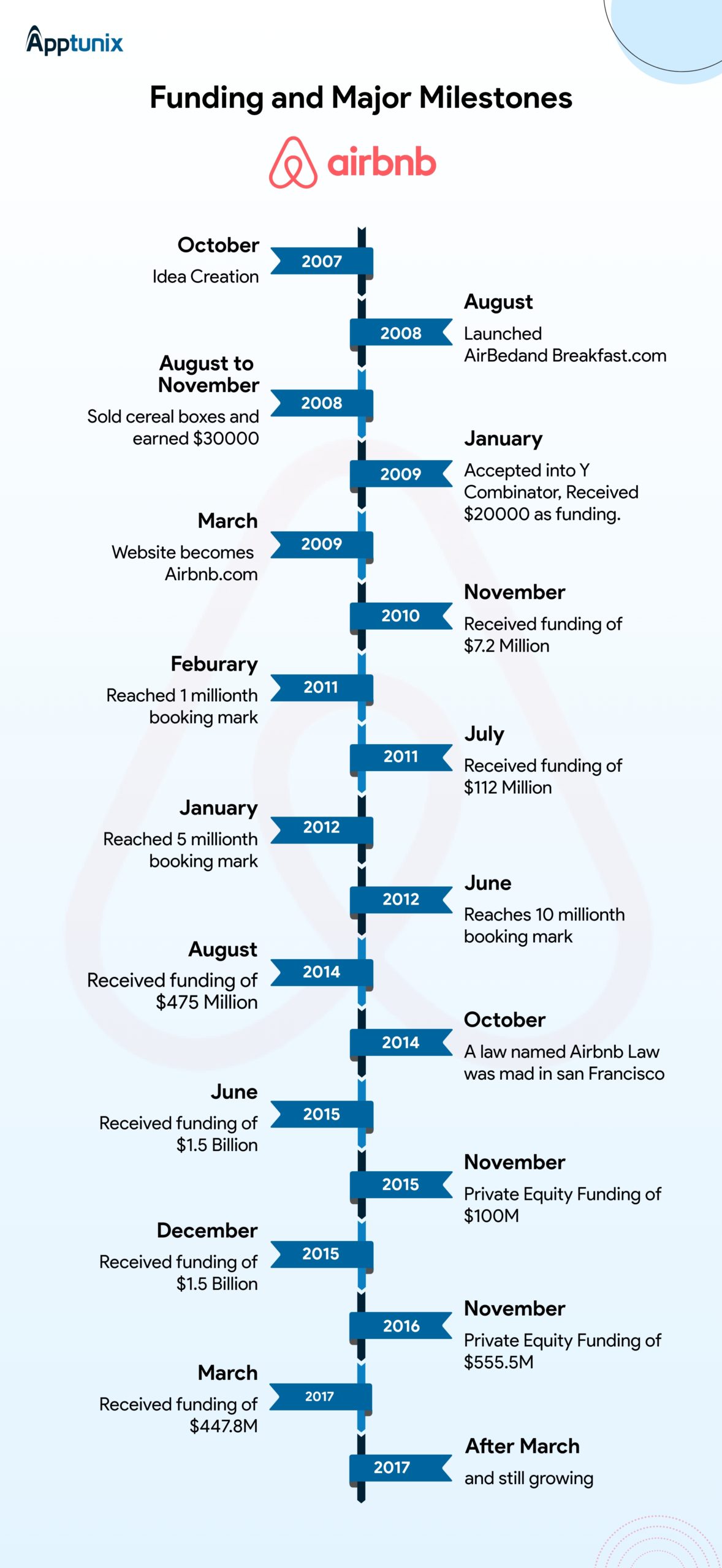
Airbnb has evolved from a simple room-sharing concept into one of the most impactful platforms in the international travel and accommodation sector. Since its inception, the company has expanded to operate in over 220 countries, boasting more than 5.6 million live listings and a network of 4 million hosts. Currently, over 150 million visitors depend on Airbnb for short-term bookings, extended stays, and experiential travel.
At its core, Airbnb is a two-sided marketplace that connects hosts with guests. On one side, you have hosts. These are individuals or property managers who list homes, apartments, or unique stays on the platform. On the other hand, you have guests seeking short- or long-term accommodation.
Once you look beyond brand recognition, Airbnb functions as a carefully balanced interaction engine. Its success depends on managing two distinct user groups that influence each other constantly. Studying this structure reveals why the airbnb business model continues to appear in startup discussions and product strategy workshops.
Airbnb now operates in more than 200 countries and territories, with millions of active listings available across diverse property types. This level of geographic spread highlights how the airbnb marketplace model scales participation rather than infrastructure. Instead of expanding through construction investments, the platform expanded by onboarding hosts and enabling discovery. That distinction shows why digital marketplaces often grow faster than traditional hospitality networks.
Over time, Airbnb facilitated hundreds of millions of guest arrivals, reflecting strong engagement even as travel behavior shifts. Recent years showed increased adoption of extended stays, with longer bookings accounting for a meaningful portion of total nights reserved. These usage patterns influence how airbnb makes money, since revenue rises alongside booking frequency and transaction value. Such engagement metrics often guide product priorities in airbnb like app development initiatives.
Airbnb’s public listing and multibillion dollar annual revenue performance confirmed the sustainability of the airbnb revenue model built around transaction fees. The company generates income primarily through service charges on both hosts and guests, reinforcing how dual sided monetization supports growth. Strong market capitalization and consistent booking demand strengthened investor confidence in marketplace scalability. These financial signals offer useful benchmarks for teams planning to build an app like airbnb with long term profitability in mind.
Airbnb’s name now carries global recognition among travelers, which contributes directly to participation confidence. Trust frameworks, review systems, and identity verification supported adoption across millions of users interacting through the platform. This credibility plays a central role in sustaining the airbnb business model, since trust drives repeated transactions. Entrepreneurs reviewing the airbnb business model canvas often find that brand reliability and safety mechanisms shape retention as much as pricing or inventory depth.
The platform expanded its offering by introducing local experiences and activities, widening engagement beyond property bookings. This diversification brought additional transaction streams while reinforcing ecosystem interaction. It demonstrates how the airbnb marketplace model evolves by layering services that increase user lifetime value. Observing these expansion decisions provides meaningful perspective for businesses entering Airbnb clone app development and evaluating future growth paths.
Airbnb operates on a powerful aggregator model much like Uber and OYO. Instead of owning hotels, it connects hosts and guests through an online platform. This Airbnb business model focuses on trust, ease, and community.
Airbnb started small. In 2008, its founders rented out air mattresses in their apartment during a busy weekend in San Francisco. They turned that experience into a website where people could book short-term stays. Over time, the idea took off.
Here’s how it works in simple steps: Guest searches → Host lists → Booking → Payment → Stay → Review
By focusing on trust, ease of use, and community feedback, Airbnb grew fast. It expanded into major countries and added millions of listings. All of this was made possible by a flexible and low-cost business strategy. The Airbnb revenue model is based on commission. The platform earns a fee from each booking made on the site. It charges both the host and the guest. Most of its income comes from these service fees.

At its core, the platform orchestrates relationships between hosts and guests. Each side brings different motivations, risks, and expectations. Coordinating them requires more than a booking interface. It requires trust systems, incentives, and communication tools that reduce hesitation and encourage participation.
Let’s unpack how this ecosystem operates.
Hosts provide the inventory that fuels the platform. Without listings, demand cannot form. Airbnb therefore invests heavily in onboarding simplicity, listing visibility, and income transparency.
Hosts engage with the system through:
Guests approach the platform with different expectations. They prioritize convenience, affordability, and trust. Airbnb responds by offering filtering tools, verified reviews, and clear booking workflows.
Typical engagement involves:
Unlike traditional commerce, peer based accommodation involves uncertainty. Airbnb addressed this through identity verification, reviews, dispute handling, and secure payments. Trust layers transformed hesitation into participation.
If you aim to build an app like Airbnb, this model offers a proven blueprint. Today, Airbnb clone software provides a jumpstart. These solutions include essential features like listings, messaging, bookings, payments, and review systems. They help you launch faster and focus on your target audience.
But what truly sets you apart is how you serve your users.

Airbnb has transformed the way individuals travel, not only through its platform but also through how it makes money. The success of both the Airbnb business and revenue model is closely linked. Both are predicated on one similar concept—let the platform do the work and have hosts and guests use it to match and exchange.
Everything, from booking a stay to listing a property, is done on Airbnb’s platform. This closed system gives Airbnb complete control over transactions, and that’s where the money comes in.
But that’s not the only way Airbnb earns.
It also generates revenue from premium features. These include promoted listings, unique experiences, and additional services, such as insurance and property management tools. At the core of the Airbnb revenue model is a commission-based system. Let’s dissect how the Airbnb revenue model functions today:
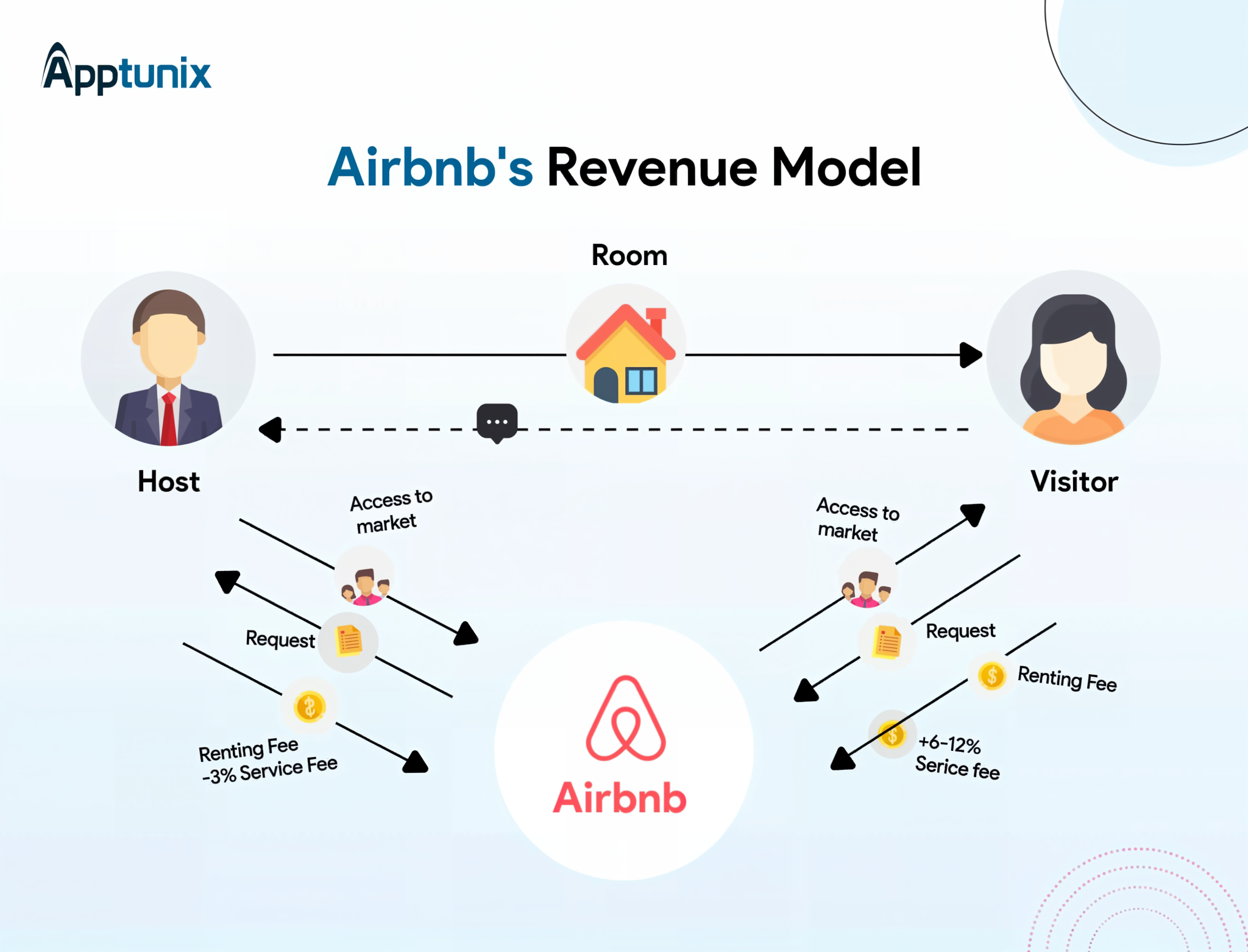
A significant portion of platform income comes from service charges applied to guest bookings. Travelers pay a percentage on top of reservation costs in exchange for convenience, secure payment handling, and booking reliability. As booking volume rises, this stream grows proportionally, illustrating clearly how airbnb makes money through activity rather than asset ownership. Teams exploring airbnb like app development often adopt similar transaction driven structures because they align monetization with user engagement.
Hosts contribute through booking related fees tied to successful reservations. This structure encourages participation because costs appear only when hosts earn income. It keeps incentives aligned across the ecosystem and ensures revenue scales alongside marketplace success. Founders planning Airbnb clone app development frequently examine this balance when designing pricing models that attract supply without discouraging adoption.
Airbnb expanded beyond accommodation by introducing activities and local experiences. These bookings generate additional income while increasing user interaction within the ecosystem. Diversification strengthens platform stability because revenue no longer depends on a single service type. Businesses aiming to build an app like airbnb often explore similar expansions to increase lifetime user value and ecosystem engagement.
Listings compete for visibility, which creates monetization potential around discovery positioning. Airbnb enables enhanced exposure through promotional placement mechanisms that influence user attention. This dynamic reflects how digital marketplaces convert visibility into economic value. Entrepreneurs studying airbnb marketplace model evolution often recognize promotional tools as secondary but scalable revenue drivers.
Long duration bookings increase total transaction value, which directly boosts fee based earnings. Remote work trends and relocation flexibility accelerated this segment, turning extended stays into an important contributor to the airbnb revenue model. Observing these behavioral shifts helps product teams designing airbnb like app development ecosystems anticipate how platform features can influence revenue outcomes.
These seven steps help create direction for teams preparing for Airbnb clone app development or planning to build an app like airbnb.
Before architecture diagrams or timelines take shape, clarify what the platform must achieve. Are you validating demand, targeting niche users, or aiming for rapid expansion? Clear goals influence feature prioritization, budgeting, and hiring decisions.
Founders using the airbnb business model canvas often begin by mapping participant value exchanges so development aligns with marketplace dynamics.
Launching lean creates learning opportunities without excessive risk. A focused initial release should include only essential booking, listing, and communication capabilities.
Early validation reveals real user behavior, guiding smarter iteration. This staged approach remains common in airbnb like app development, where gradual expansion reduces wasted investment.
Marketplace platforms rarely stay small for long. Backend design must anticipate growth even if traffic remains modest at launch.
Choosing modular services, scalable databases, and load handling strategies ensures readiness for rising participation. This preparation mirrors infrastructure planning seen within the airbnb marketplace model where interaction volume fluctuates constantly.
External services often provide faster capability expansion than internal builds. Payment systems, geolocation tools, messaging solutions, and analytics platforms add immediate value.
Smart integration planning supports revenue pathways and transaction flow, reinforcing monetization structures that illustrate how airbnb makes money.
Users rarely interact from a single device. They browse on phones, confirm bookings on laptops, and manage listings from tablets.
Ensuring consistent experience across web and mobile interfaces increases adoption and retention. This accessibility plays a major role in successful Airbnb clone app development strategies targeting global audiences.
Technical creation represents only part of the investment picture. Marketing, support operations, infrastructure scaling, and compliance requirements influence financial planning.
Understanding these commitments helps founders evaluate sustainability of the airbnb revenue model they plan to replicate or adapt.
Marketplace platforms evolve constantly as user behavior shifts. Roadmaps must allow for feature refinement, geographic expansion, and monetization adjustments.
Founders who plan adaptability early position themselves to compete effectively within ecosystems shaped by the airbnb business model, where innovation rarely stops after launch.
As a business owner, it is important to learn from the best and incorporate those ideas into your own business. Therefore, let us now explore the 5 best takeaways to acknowledge.
The goal stays the same: show the right stay to the right guest at the right time.
1. Your App Must Resolve the Real Issues:The co-owner of Airbnb Brian Chesky, states that while initiating a business, your idea must not be unique and must resolve genuine problems. In comparison to the only alternative, i.e., the hotels, Airbnb provides a platform for passionate travelers to find a comfortable and pocket-friendly place across the globe. Furthermore, the app also provides a passive income for people who have extra space.
Today there is a myriad of similar travel apps, but back in 2008, this was an unexplored field and was much needed in the industry. Therefore, your ideas for your business should be innovative and such that the consumers also get profit from your business.
2.Your App Must Prioritize User Needs:Understanding your users’ needs is the most important factor in starting a business. Airbnb realized the problem of receiving payments for people who rent out their spaces. To curb this issue of the hosts they added advanced payment options. Furthermore, they initiated efforts to visit the listed places and take attractive images to attract consumers. Therefore, it is apparent that they gave proper emphasis on the marketing of their commodities.
Also, they emphasized the importance of 24/7 customer service. This clearly shows that if you prioritize the user needs then your company will reach good heights of success.
3.Your Apps Must Include Disruptive Technology:Today’s world is the world of technology; if you make a normal app with certain features, then succeeding like Airbnb is a fool’s paradise. Both your idea and the technology you incorporate need to be innovative and disruptive. However, you will help you get funded, and in the long run, you will earn a lot.
The growth of Airbnb made a marketplace that was rare using the help of disruptive technology. Therefore, while initiating the idea of making a product and starting a business you must incorporate disruptive innovation and technology. By following this guideline you will certainly be able to have the potential to lead in the market.
4.Your App Needs to Have Astounding UX:Having an exceptional UX must be a priority for a business owner. The UX will enhance the user engagement by many folds as it will show suggestions as per their recent searches. Furthermore, the map listing will help users get an idea of how many users are probing the area. The map integration will undoubtedly enhance the trust of the users for your app.
Therefore, to keep yourself in your consumers’ shoes, you must use a UX that complements their needs and requirements.
Airbnb didn’t win by chance. It won by understanding people better than the industry it disrupted.
By the time most founders reach out to us, they already understand one thing. Building a marketplace is not just about screens and features. It’s about decisions that affect scale, trust, and revenue months or even years down the line.
Who are your hosts? What makes guests hesitate? Where does trust break down?
These questions shape the product far more than feature lists ever will. If you’ve been thinking about build Airbnb like app, this is the moment to act before the market decides for you. Apptunix helps founders and businesses build custom Airbnb clone apps that are secure, scalable, and ready for the market.
We don’t start with templates or assumptions. Every Airbnb-style platform we build begins with market understanding.
At Apptunix, we’ve spent years building and scaling marketplace apps across travel, rentals, services, and on-demand platforms. Our solutions serve thousands of users daily, handle complex bookings, and process payments at scale.
If Airbnb proved anything, it’s this: the right model, built the right way, can change an entire industry. And we’re here to help you build yours.

Q 1.What is the Airbnb business model?
The Airbnb business model is based on the aggregator concept. Airbnb connects property owners (hosts) with travelers (guests) via its online platform. It doesn’t own property; instead, it enables peer-to-peer short-term rentals, earning through service fees on each transaction.
Q 2.How does Airbnb make money?
The Airbnb revenue model is commission-based. It earns by charging hosts a percentage of the booking amount (usually 10%) and also charges guests a service fee (around 3%) for every confirmed reservation.
Q 3.Can I build an app like Airbnb for a different niche?
Yes, you can build an app like Airbnb for various markets — such as pet boarding, coworking spaces, car rentals, or adventure experiences. The core marketplace model can be adapted for different industries.
Q 4.What is Airbnb clone software?
Airbnb clone software is a pre-built, customizable solution that replicates Airbnb’s core functionality. It’s ideal for startups looking to launch a rental marketplace quickly without building everything from scratch.
Q 5. Is using Airbnb clone software a good idea for startups?
Yes. If you want to test your idea with minimal time and cost, Airbnb clone software can help you launch fast. It also lets you add custom features as your platform grows.
Q 6.How do I monetize an app like Airbnb?
You can apply the Airbnb revenue model to earn through service fees, premium listings, featured experiences, subscription models, and value-added services like insurance or cleaning.
Q 7.What features should an Airbnb-like app have?
Must-have features include property listing, search filters, booking system, in-app messaging, payment gateway, reviews, host dashboard, and admin controls. Advanced features include AI-driven recommendations and dynamic pricing.
Q 8.Who can help me develop an Airbnb-like platform?
Partnering with an experienced team like Apptunix ensures your project is built with the right strategy, technology, and scalability. Whether you’re using Airbnb clone software or going custom, expert guidance matters.
(2 ratings, average: 4.50 out of 5)
Get the weekly updates on the newest brand stories, business models and technology right in your inbox.
Book your free consultation with us.
Book your free consultation with us.

One Central, The offices 3, Level 3, DWTC, Sheikh Zayed Road, Dubai, United Arab Emirates
+971 50 782 1690