Airbnb Business & Revenue Model Explained!
6297 Views 7 min January 8, 2026

Introducing Nalini, our tech-savvy content expert at Apptunix, with 8+ years of experience in technical content writing. With a knack for making complex ideas simple, she turns intricate tech concepts into engaging reads. Her work highlights emerging trends such as AI-powered applications, cross-platform development, digital transformation initiatives, and B2B technology solutions. Through her strategic storytelling, she plays a vital role in advancing Apptunix’s mission to shape the future of mobile and web experiences, enabling clients to make smarter, technology-driven decisions that accelerate growth and secure a competitive edge.

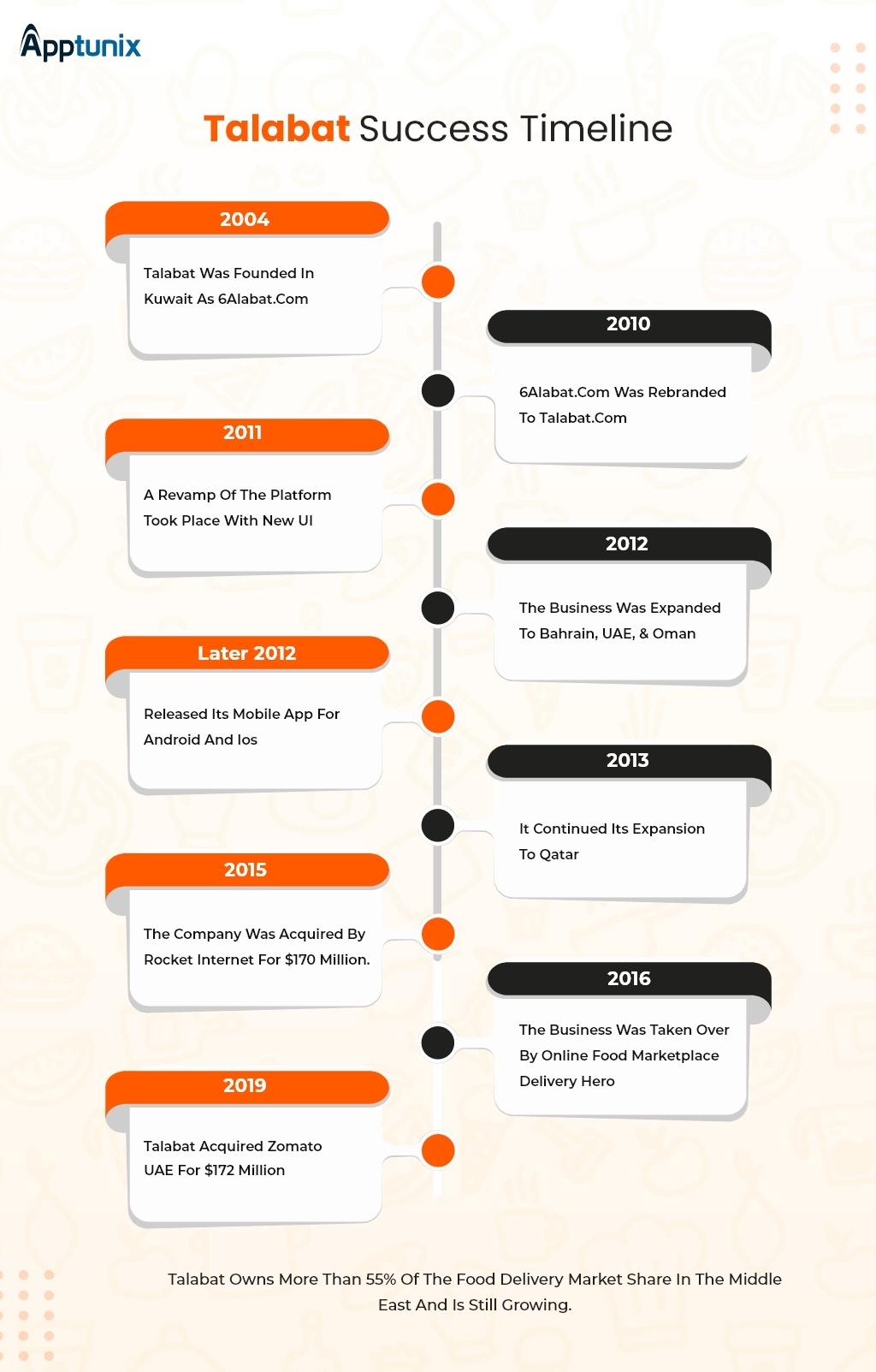
Talabat is an online food and on-demand delivery platform operating mainly in the Middle East.
It works as a marketplace, connecting customers with restaurants and local stores through its app.
Customers place orders, vendors prepare them, and Talabat manages the delivery process.
Talabat earns revenue mainly through commissions from restaurants on each order.
Additional income comes from delivery fees, subscriptions (Talabat Pro), and in-app advertising.
The platform also offers groceries and essentials through Talabat Mart to increase order frequency.
Strong technology, convenience, and wide partner network help Talabat maintain market leadership.
The innovations in the Online Food Delivery Market are growing with all leaps and bounds worldwide and the Middle East is no exception. Especially, if we talk about the UAE, Saudi Arabia, and Kuwait, the demand for on-demand food delivery apps is on the rise in all these nations. The main reason behind this growth is the increasing popularity of online shopping in MENA due to the convenience it provides. As a result, food delivery apps like Talabat are generating millions of dollars in revenue by catering to the needs of a growing economy and some of the richest countries in the world.
In Q3 2025, Talabat’s Monthly Active Users (MAU) reached 7.5 million, marking a 23% year-over-year increase. And all because of its amazing strategies and business model. A few years ago, the Middle East had three major food-delivery apps – Talabat, Zomato UAE, and Uber Eats.

In this article, we will talk about the Talabat Business Model & Revenue Model to find out how the app works, makes money, and what strategies it followed for your own food app delivery development. So, let’s get started.’
| Details | Information |
|---|---|
| Founders | Khaled Al Otaibi & Abdulaziz Al Loughani |
| Founding Date | 2004 |
| Total Funding Raised | $2.04 billion (AED 7.5 billion) |
| Headquarters | Kuwait City, Kuwait |
Talabat is an online food delivery app that works kind of like a digital waiter.
You open the app, browse through your favorite restaurants or fast food spots, choose what you want to eat—whether it’s burgers, pizza, sushi, or even groceries—and place your order. Then, Talabat connects with the restaurant, gets your food prepared, and a delivery driver brings it right to your doorstep.
It’s super popular in the Middle East—especially in countries like the UAE, Kuwait, Qatar, and Saudi Arabia.
Oh, and it’s not just limited to food. You can also order groceries, flowers, medicine, and more—basically anything you need quickly!
Talabat is an online food and grocery delivery platform that acts as a middleman between customers and local vendors. Users can browse nearby restaurants or stores, place orders via the app or website, and get their items delivered by Talabat’s fleet of drivers. It earns revenue through delivery fees, commission from vendors, and premium placements. With features like real-time tracking, digital payments, and scheduled deliveries, Talabat offers a seamless and convenient delivery experience.
For example, Uber Eats had to shut down its services in the UAE and Egypt because of its inefficiency to withstand the competition. But, Talabat is still the leader. The app won the hearts of the people in the Middle East by providing convenient and unmatchable services. Along with restaurants, it now lets users purchase items from gift shops, grocery stores, and flower shops.
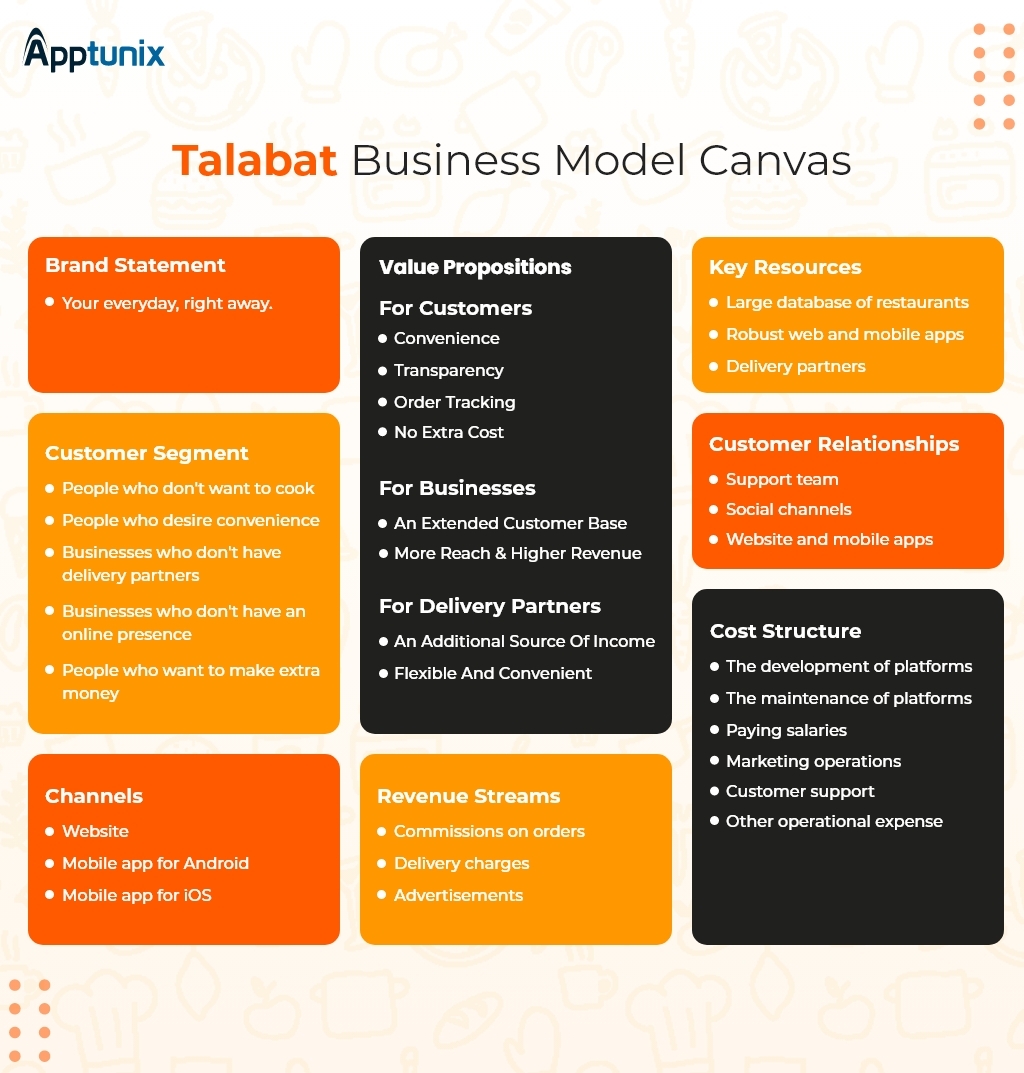
“Your everyday, right away.”
Talabat positions itself as a fast, reliable platform for everyday needs—food, groceries, and more—delivered quickly and conveniently.
Consumers seeking convenience
Individuals who prefer ordering food or groceries instead of cooking or going out.
Busy professionals & families
Users with limited time who value speed, reliability, and variety.
Restaurants without delivery infrastructure
Food businesses that lack in-house delivery capabilities.
Small & medium restaurants without online presence
Local eateries looking to expand reach through a digital platform.
Delivery partners (drivers)
Individuals seeking flexible work and additional income opportunities.
Convenience – Easy ordering from multiple restaurants via one app.
Transparency – Clear pricing, menus, delivery fees, and estimated delivery times.
Order Tracking – Real-time tracking from preparation to delivery.
No Extra Cost – Competitive pricing with frequent offers and discounts.
Extended Customer Base – Access to a large and active user base.
Increased Reach & Revenue – Higher order volumes without investing in delivery logistics.
Additional Source of Income – Opportunity to earn per delivery.
Flexible & Convenient – Choose working hours freely using the app.
Website – Used for browsing, ordering, and promotions.
Android Mobile App – Primary channel for most users.
iOS Mobile App – Optimized experience for Apple users.
Customer Support Team – Resolves complaints, refunds, and delivery issues.
Social Media Channels – Engagement, promotions, and brand communication.
Mobile App & Website – Personalized recommendations, offers, and notifications.
Large Restaurant Database – Thousands of partner restaurants across regions.
Robust Technology Platform – Scalable web and mobile applications.
Delivery Partner Network – Fleet of on-demand drivers ensuring fast delivery.
Brand Recognition – Strong market presence in the Middle East and beyond.
Commission on Orders – Percentage charged to restaurants per transaction.
Delivery Fees – Paid by customers based on distance and demand.
Advertisements & Sponsored Listings – Restaurants pay for higher visibility on the app.
Platform Development – Building and improving apps and backend systems.
Platform Maintenance – Hosting, security, and system upgrades.
Salaries – Tech teams, operations, marketing, and support staff.
Marketing & Promotions – Discounts, ads, and user acquisition campaigns.
Customer Support Operations – Handling inquiries, refunds, and complaints.
Other Operational Expenses – Logistics, legal, and administrative costs.
Ever wondered how a simple interface translates into a multi-billion-dollar DFM listing? Talabat’s revenue model is a masterclass in modern diversification, moving far beyond simple “delivery.” As a pioneer in the MENA Q-commerce space, the platform leverages five primary revenue streams to fuel its $10B valuation:
1. Merchant CommissionsAt the heart of Talabat’s monetization lies its commission revenue from partner restaurants and stores. Talabat typically charges a 15%–35% commission per order. In exchange, restaurants and retailers gain access to a massive digital storefront and a world-class logistics network. This fee is the backbone of how food delivery apps like Talabat make money because it scales directly with Gross Merchandise Value.
2. Delivery FeesNo matter how sleek the app experience is, someone still has to bring the food to your doorstep. Using dynamic pricing algorithms, Talabat charges users a fee that fluctuates based on distance, demand, and weather. This ensures the 160,000+ rider fleet stays efficient and profitable even during peak “rush hours.”
3. Talabat Pro SubscriptionsA major 2026 growth driver, this monthly subscription offers members “free delivery” and exclusive perks. It creates a recurring revenue stream while significantly increasing customer LTV (Life Time Value). Pro users now drive nearly half of Talabat’s total GMV.
4. Advertising and Promotions (AdTech)For brands, the app is prime digital real estate. Through “Featured Listings” and “Banner Ads,” vendors pay a premium for top-tier visibility on the search results page. This form of advertising is a high-margin revenue stream, helping restaurants attract customers while padding Talabat’s bottom line.
5. Multi-Vertical Retail SalesMoving toward a “Full-Stack” model, Talabat now earns direct retail margins through Talabat Mart (tMart). By operating its own “dark stores,” they sell groceries and daily essentials directly to consumers, capturing the entire profit chain.
Together, these streams create a resilient and diversified Talabat business model. If you’re thinking of Talabat clone app development, these insights could be the blueprint you need!
Following, let’s learn about SWOT (Strength, Weakness, Opportunities & Threats) analysis of Talabat Business Model. Let’s learn:
Strong Brand Recognition
Talabat is one of the most recognized food delivery platforms in the Middle East, with high customer trust and loyalty.
Extensive Restaurant Network
Partnerships with thousands of restaurants provide customers with wide variety and choice.
Robust Mobile-First Platform
Well-designed Android and iOS apps enable smooth ordering, real-time tracking, and digital payments.
Large Customer Base
A wide user base drives high order volumes, attracting more restaurant partners.
Flexible Delivery Model
Combination of in-house and third-party delivery partners improves scalability and coverage.
High Operating Costs
Expenses related to delivery logistics, platform maintenance, marketing, and customer support reduce margins.
Dependence on Restaurants and Drivers
Service quality is affected by restaurant preparation times and driver availability.
Price Sensitivity
Customers may be discouraged by delivery fees, surge pricing, or higher menu prices.
Customer Complaints & Service Issues
Late deliveries or incorrect orders can negatively impact user satisfaction and retention.
Expansion into New Services
Growth in groceries, pharmacies, and convenience items increases order frequency.
Market Expansion
Entry into new cities and emerging markets within and beyond the Middle East.
Data-Driven Personalization
Using customer data to improve recommendations, loyalty programs, and targeted promotions.
Partnerships & Cloud Kitchens
Collaborations with virtual brands and cloud kitchens can boost exclusivity and margins.
Growing Demand for Online Delivery
Increasing urbanization and digital adoption continue to drive demand for food delivery.
Intense Competition
Competition from platforms like Careem, Uber Eats, Deliveroo, and local startups.
Regulatory Challenges
Changes in labor laws, pricing regulations, or food delivery policies can increase costs.
Rising Delivery Costs
Fuel prices, inflation, and driver incentives can impact profitability.
Customer Switching Behavior
Low switching costs make it easy for users to move to competitors offering better deals.
Cybersecurity & Data Privacy Risks
Data breaches or system outages could damage trust and brand reputation.
If you’re serious about building the next big thing in food delivery, you need more than just developers. You need top mobile app development company UAE. We’re not just coders; we’re creators of success stories. At Apptunix, we transform your idea into a powerful, user-centric, and revenue-generating app that stands tall among giants like Talabat. With years of hands-on experience, a top-tier team, and deep industry know-how, we help startups and enterprises launch food delivery platforms that actually thrive in today’s competitive market.
Here’s Why So Many Brands Trust Apptunix:
Let’s get in touch today!

Q 1.What type of business model does Talabat use?
Talabat operates a platform-based, multi-sided marketplace model. It connects three main parties: customers, restaurants, and delivery partners, enabling food and everyday-item delivery through its digital platform.
Q 2.How does Talabat make money?
Talabat earns revenue primarily through:
Commissions from restaurants on each order
Delivery fees paid by customers
Advertising and sponsored listings within the app
Q 3.How much commission does Talabat charge restaurants?
Talabat typically charges restaurants a percentage commission per order, which varies by market, restaurant size, and delivery arrangement. Higher commissions may apply if Talabat handles delivery.
Q 4.Does Talabat own restaurants or kitchens?
No, Talabat does not own restaurants. It partners with independent restaurants, although it may collaborate with cloud kitchens and virtual brands to expand offerings.
Q 5.How does Talabat benefit restaurants?
Talabat helps restaurants by:
Increasing customer reach
Providing delivery logistics
Offering marketing and promotional tools
Enabling online visibility without upfront tech investment
Q 6.How does Talabat’s delivery model work?
Talabat uses a hybrid delivery model, which includes:
Talabat-managed delivery partners
Restaurant-managed delivery in some cases
This allows flexibility and scalability across different regions.
Q 7.Who pays the delivery fee on Talabat?
The customer usually pays the delivery fee, which may vary based on distance, demand, and promotions. In some cases, restaurants may subsidize delivery to attract more orders.
Q 8.Does Talabat make a profit?
Like many food delivery platforms, Talabat focuses on scale and market leadership. Profitability varies by market and period, as high operational and marketing costs impact margins.
Q 9.How does Talabat keep prices competitive?
Talabat uses:
Promotional discounts and vouchers
Dynamic delivery pricing
Loyalty programs and subscriptions
These strategies help attract and retain users in a competitive market.
Q 10.What role does technology play in Talabat’s business model?
Technology is central to Talabat’s success, enabling:
Seamless ordering and payments
Real-time order tracking
Data-driven recommendations
Efficient logistics and routing
Get the weekly updates on the newest brand stories, business models and technology right in your inbox.
Introducing Nalini, our tech-savvy content expert at Apptunix, with 8+ years of experience in technical content writing. With a knack for making complex ideas simple, she turns intricate tech concepts into engaging reads. Her work highlights emerging trends such as AI-powered applications, cross-platform development, digital transformation initiatives, and B2B technology solutions. Through her strategic storytelling, she plays a vital role in advancing Apptunix’s mission to shape the future of mobile and web experiences, enabling clients to make smarter, technology-driven decisions that accelerate growth and secure a competitive edge.
Book your free consultation with us.
Book your free consultation with us.

One Central, The offices 3, Level 3, DWTC, Sheikh Zayed Road, Dubai, United Arab Emirates
+971 50 782 1690